
Calendar and Venue
Date: July 22nd to 25th, 2026
Time: 09:00 – 18:00 NPT (GMT+0545)
Venue: Kathmandu Marriott Hotel, Kathmandu, Nepal.
Workshop Details
1. Next-Gen Routing
Trainers:
- Priya Ranjan Karn – Websurfer Nepal Communication System, HOD RnD – Lead Instructor
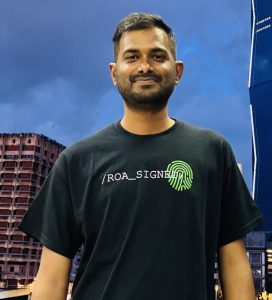 Priya Ranjan Karn is a seasoned ISP networking professional with over 12 years of industry experience. As Head of R&D at one of Nepal’s premier Internet Service Providers, he leads a specialised technical team driving the design, deployment, and optimisation of MPLS networks, peering architectures, and associated services. A strong advocate for industry best practices, he is equally committed to knowledge sharing — actively mentoring both emerging and experienced network engineers to grow their skills and advance their careers.
- Sujan Mahat – NCELL, Senior Network Engineer – Backbone & Core Transport
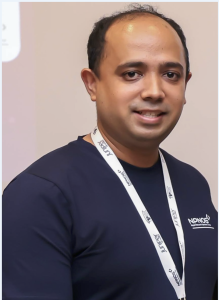 Network Engineer with 8+ years of experience in designing and managing large-scale telecom networks. Specialises in routing, switching, security,
and MPLS, with strong expertise in BGP, IP transport, CDN integration, and DNS operations. Experienced in optimising traffic flow, deploying caching platforms, and working across multi-vendor environments. As an instructor, he delivers practical, real-world training focused on building resilient, secure, and high-performance networks aligned with service provider standards.
- Kumar Tiwari – Subhashree Technologies Pvt. Ltd, Technical Head
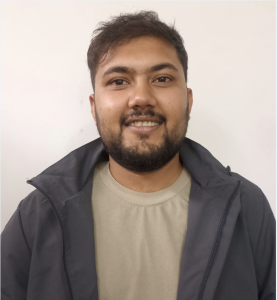 Kumar Tiwari is the Technical Head at Subhashree Technologies Pvt. Ltd. with 5+ years of experience in enterprise networking and system integration.
He has strong expertise in Routing, Switching, SD-WAN, and Network Security, along with proven experience in handling enterprise-level projects. He is passionate about sharing practical industry knowledge and real-world networking experience.
- Sakar Pudasaini – Driven Tech, Inc, Network Engineer
 Sakar Pudasaini is a Network Engineer at Driven Tech, Inc. specialising in the design and optimisation of network infrastructures. With an advanced degree in Information and Communication Engineering, Sakar blends deep
academic insight with hands-on production experience in complex network
environments. Driven by a culture of technical mentorship, Sakar is deeply invested in empowering fellow engineers and helping newcomers expand their skill sets and reach their full potential. Sakar also shares his technical insight at forwardingengine.com.
SYNOPSIS
================================================================================
This intensive workshop delivers a comprehensive blend of theoretical foundations and hands-on laboratory exercises designed to build the advanced skills required for the design, configuration, operation, management, and optimisation of large-scale network infrastructures. Targeted at network engineers and architects operating within Internet Service Providers (ISPs), Network Service Providers (NSPs), and large Enterprise environments, the programme covers the core protocols and technologies that underpin the modern Internet.
TARGET AUDIENCE
================================================================================
Technical staff who are building or operating a Service Provider or Enterprise with international and/or multi-provider connectivity.
PRE-REQUISITES
================================================================================
It is assumed that workshop participants have working knowledge of the following:
> Working knowledge of an IGP (OSPF or IS-IS).
> Network operations, Internet technologies, OSI reference model, and TCP/IP.
> Basic command-line (CLI) skills.
This workshop is not an introduction. Lab exercises use Cisco IOS, IOS-XE, and IOS-XR configuration syntax.
Academy resources to be completed before the start of the workshop:
> APNIC Academy — IPv6 Fundamentals
> APNIC Academy — Routing Fundamentals
COURSE OUTLINE
================================================================================
A complete 4-day workshop curriculum integrating OSPFv2, IPv6, OSPFv3, VRF-Lite, and BGP into a logical progression — from local IGP optimisation to global inter-domain routing and multi-tenancy.
- DAY 1 | OSPFv2 Implementation & Database Optimisation
- OSPF Fundamentals & Adjacency
- LSDB Architecture & Scalability
- Path Control & Strategy
- DAY 2 | IPv6 Architecture & OSPFv3 Deployment
-
- Foundational IPv6 Architecture
- OSPFv3 Deep Dive
- IPv6 Host Connectivity
- DAY 3 | BGP Architecture & Path Selection Mastery
- BGP Introduction & Implementation
- The BGP Path Selection Algorithm
- DAY 4 | Multi-Tenancy, Scalability & Security
- VRF-Lite & Segmentation
- Advanced BGP Scalability
- BGP Security & Troubleshooting
- Advanced VPN Architecture & IPsec Fundamentals
Course Materials
2. Network Security
Trainers
- Shane Hermosa – Manager Development
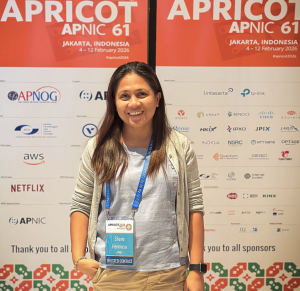 Sheryl (Shane) Hermoso is the Manager – Development at APNIC, leading a team dedicated to providing technical training and infrastructure development support across the Asia Pacific region. With expertise in network operations for ISPs, IXPs and enterprise, she plays a key role in capacity building strategies, supporting the technical community, mentoring future engineers, and fostering impactful learning experiences. Shane is a regular volunteer and speaker at NOGs and conferences, advocating IPv6, RPKI, and secure Internet best practices.
- Rupesh Basnet – Co-Founder @ Om Networks, APNIC Community Trainer (South Asia and Oceania) (Voluntary)
 Rupesh Basnet has been working in the industry since the early 2007. Currently, he is a co-founder at OM Networks, an IT company, where he leads the company’s technical and research team. He had previously worked with Internet Service Provider in Nepal for more than 7 years holding differentpositions and assisting in areas related to System/Network Administration. During the tenure he worked in different projects that involves ISP/NSP’s network/system design, up-gradation & implementation. He has also been associated with local and international NOG’s as an active member helping as an instructor in different workshop tracks as well as volunteers in few.
Synopsis
This comprehensive Network Security workshop provides essential knowledge and practical skills for safeguarding modern network infrastructures. The course covers critical aspects of network security, blending theoretical concepts with hands-on application.
Participants will explore key topics including cryptography fundamentals, VPNs, access control mechanisms, packet analysis, DDoS mitigation strategies, intrusion detection systems, and routing security including RPKI. Through a combination of expert instruction and practical lab exercises, attendees will learn to identify vulnerabilities, architect secure networks, and implement effective monitoring solutions.
By the end of this workshop, participants will be well-equipped to address the complex challenges of network security in their organizations, armed with both the understanding and practical skills to enhance their network’s defenses against evolving threats.
Target audience
Network and System Engineers and IT Managers who are interested in security practices and want to gain an understanding of network and cyber security.
Ideal participants have a basic understanding of networking concepts and are looking to enhance their knowledge of network and cybersecurity practices.
Prerequisite
It is assumed that participants have a basic understanding of network operations, Internet technologies, OSI reference model and TCP/IP. In particular, you should be able to:
- Use a command line interface to configure routers, switches and servers.
- Basic Linux command line (CLI) skills.
- Use the vi or nano or any other text editor for Linux
Academy resources to be completed before start of workshop
Course Outline
- Network Security Fundamentals
- Cryptography
- Infrastructure Security
- DDoS Attacks and Countermeasures
- Honeypots and Honeynet
- Packet Analysis
- Intrusion Detection with Suricata
- Flow Monitoring & Log Management
- Routing Security with RPKI
- IPv6 Security Considerations
- IPsec VPN
- DNS Security & KINDNS
Other Requirements
- Participants are advised to bring their own laptop or desktop computers with high-speed internet access and administrative access to system. It is also recommended that computers have Intel i5 or i7 processor, >=8GB of RAM and 30GB of free hard disk space.
- Software: SSH Client, Telnet Client (PuTTy)
- Confirm Secure SHell (SSH) is allowed from the office or home network to access the lab infrastructure. Test SSH connectivity, try to connect to route-views.routeviews.org. For example, from the CLI type: ssh [email protected]
Course Materials